
Key takeaways
- Exam stress shows up as moodiness, overwhelm, trouble making decisions, low motivation, muscle tension, headaches and fidgeting. Take it seriously at any year level.
- Swap cramming for a study plan that works backwards from the exam date, with study spaced out over time.
- When worries snowball, notice it first, then change space and break the state with a breathing practice.
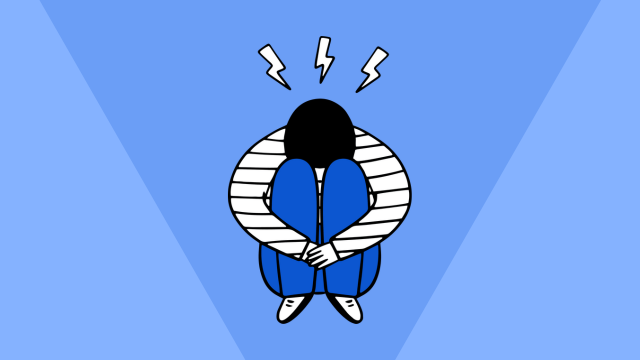
It's a study period in the last weeks of Year 12. One of your students has their notes open, but they haven't turned a page in twenty minutes. When you crouch beside the desk and ask how they're going, it all comes out at once: if they fail this exam, they'll never get a job.
Every year, the final weeks of school bring a run of exams that can feel like they decide everything, and plenty of teenagers carry that pressure for weeks.
So how do you help students with exam stress? Start by learning the signs and taking what students feel seriously. Then give them three practical tools: a study plan that works backwards from the exam date, study that's spread out over time instead of crammed, and a simple routine for the moment their thoughts start to spiral. Each one helps a student feel more in control, and feeling in control takes the edge off the stress.
These ideas come from Emmanuelle Jones, founder and lead teacher at breathe2b. Emmanuelle has taught high school for over 20 years and spent a decade as the staff and student wellbeing leader and mindfulness facilitator at her last school. Her course on exam stress opens with a line every Year 12 teacher will recognise: "Exam time equals stress time for most students."
The ideas
- Learn the signs.Students under exam pressure often get moody, say out loud that they're overwhelmed, or struggle to make decisions. Emmanuelle also lists low motivation, muscle tension, headaches and fidgeting.
- Take it seriously, whatever their year level.The stress students feel is real, and it affects their whole wellbeing. In Emmanuelle's words, "We must remember not to trivialise what the students are experiencing." At the same time, let them know there's plenty they can do to get through this time well.
- Find out where the pressure comes from.For a lot of students it's a fear of failure. Emmanuelle points out that the fear can come from themselves, from their family, "or even from us as their teachers". Some students simply don't know what to study, or how to take that first step.
- Swap cramming for a plan that works backwards.Cramming raises stress levels, and the late nights that come with it cause memory fatigue. A better plan starts at the exam date and works back to today, with the content split into manageable chunks and a goal for each day or week.
- Space the study out.Leave time between study sessions and come back to each topic more than once. When a student half-forgets something, their brain has to work harder to bring it back, and that effort helps the learning stick.
- Catch the snowball early.Worried thoughts that go round and round can roll into catastrophising, where one bad exam turns into "I'll never get a job". The first step out is to notice it. Then, as Emmanuelle puts it, "Step outside, change space, break state", and follow it with a breathing practice.
 Supporting Students to Effectively Manage Exam StressStart this course
Why cramming backfires
Cramming means trying to squash everything for an exam into working memory in a really short time. Emmanuelle explains that the brain needs to rest between topics to fully digest them, so squashing it all in at once works against how memory functions.
The research backs her up. The Australian Education Research Organisation puts it simply: spacing learning allows students to remember more in the long term than if they learnt everything at once (AERO).
Here's how the two approaches compare for a student in the final weeks.
| Cramming | A plan that works backwards | |
|---|---|---|
| Where it starts | The night before | The exam date, mapped back to today |
| How content is covered | All at once | In chunks, with a goal for each day or week |
| What it does to stress | Raises it | Gives regular wins to celebrate |
| What it does to memory | Late nights cause memory fatigue and hurt concentration | Repeating topics over time improves understanding and retention |
Emmanuelle's plan also builds in celebrations. When a student finishes a chunk, they celebrate with something that nourishes them, like getting out into nature or catching up with friends. Her advice for the big night out: "Save the party until afterwards."
What catastrophising looks like
Emmanuelle explains rumination with a cow. A cow chews its cud over and over, bringing the same grass back up again and again. Anxious thoughts do the same thing: they keep coming back, and they get harder to swallow. Her verdict is simple: "We need to stop being a cow."
If the chewing carries on, the thoughts start to snowball. They gather speed like a snowball rolling down a mountain and crowd the mind until the body believes it's in real danger. The chest gets tight and breathing gets shorter. At that point the body has switched into fight, flight or freeze, and in that state a student can't think rationally, let alone retain information for an exam.
That's why noticing comes first. Once a student can say "I'm catastrophising right now", they can step in before the thoughts spiral further.
How to use this in your classroom this week
- In the last lessons before exams, talk about cramming openly. Ask students to map a study plan backwards from their first exam, broken into chunks with a small reward for each one.
- In one-on-one conversations, use the signs above as your prompt to check in. Listen first. Ask what's behind the stress before offering fixes.
- Before stress peaks, teach the "notice it, change space, break state" routine to the whole class, so they know it before they need it.
- If the stress seems severe or doesn't ease, or a student talks about not coping, bring in your school counsellor or wellbeing team and follow your school's procedures.
- If you're a relief teacher covering a Year 12 study period, the same moves work. Check in with anyone showing the signs, and use the time to help them map out their plan.
Emmanuelle's top tip for students is to "approach study in a playful and inquiring way". Encourage them to be surprised by what they learn, to balance work and fun, and to stay connected to the people around them.
Take it further with your students
Everything above gets students started. In Supporting Students to Effectively Manage Exam Stress, Emmanuelle goes much further, and her videos are made so you can play them straight to your class. Inside the course, you'll find:
- the breathing practice she teaches for the moment catastrophising kicks in
- a guided lay-down body scan for the night before an exam
- the eight essentials of a home study space that works
- self-care and sleep habits for exam season, including eye yoga for long hours at the desk
- an exam-day routine, from packing the night before to using every minute of the exam
- printable resources, including a study plan, a resource checklist and a sleep guide
If you'd like to support teenagers with worries that run deeper than exams, Teaching Teens to Manage Anxiety is the place to go next. You'll find more courses for high school teachers in secondary teacher PD.
And to every student sitting exams, Emmanuelle's closing words say it best: "Good luck, you've got this."
Frequently asked questions
What are the signs of exam stress in students?
Common signs are moodiness, saying out loud that they feel overwhelmed, trouble making decisions and low motivation. Physical signs include muscle tension, headaches and fidgeting.
How can teachers help students with exam stress?
Take the stress seriously, find out where the pressure comes from, help students build a study plan that works backwards from the exam date, and teach a simple routine for when worried thoughts start to spiral. If the stress seems severe or doesn't ease, or a student talks about not coping, bring in your school counsellor or wellbeing team and follow your school's procedures.
Why doesn't cramming work?
Cramming squashes a lot of information into a short time and usually means late nights. That raises stress and causes memory fatigue. Spacing study over time helps students remember more in the long term.
What is catastrophising?
Catastrophising is when worried thoughts snowball until a situation feels far worse than it is, such as believing one exam decides your whole future. The first step out is noticing it, then changing space and doing a breathing practice.
Cramming or spaced study: which is better?
Spaced study. Guidance from the Australian Education Research Organisation says spacing learning helps students remember more in the long term than learning everything at once.
What is the best way to celebrate study progress?
Celebrate each finished chunk of the study plan with something healthy, like time in nature or catching up with friends, and save the party until after exams.
How much does the exam stress course cost?
Supporting Students to Effectively Manage Exam Stress is included in a ClassCover Learn membership, which costs $99 a year for 200+ hours of PD across every course.