Key takeaways
- Build your literacy block from the research: Scarborough's Reading Rope for reading and Sedita's Writing Rope for writing, so every strand gets explicit teaching.
- Split the block into two parts. Part one teaches the core reading skills, and part two works from a mentor text into writing, run as short mini lessons that build on each other.
- K-2 leans on word recognition and sentence-level writing. Years 3 to 6 rotate fluency, grammar, spelling, vocab and comprehension across the week and build towards writing whole texts.
It's Sunday night and you're looking at next week's literacy plan. Phonics, spelling, handwriting, fluency, vocab, grammar, comprehension, writing. Every one of them matters, and they all need a place in the same block of time. Where do you even start?
So how do you structure a literacy block? Start with the research on how children learn to read and write, then split your block into two parts. The first part explicitly teaches the core reading skills: phonological awareness, phonics, spelling, handwriting and fluency. The second part works from a mentor text to build understanding of texts and leads into explicit writing instruction. Run both parts as short mini lessons that build on each other, and adjust the balance as students move from K-2 into Years 3 to 6.
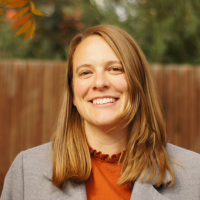
This framework comes from Aaron Johnston, deputy principal, co-host of the Teacher Takeaway podcast and founder of Mr J's Learning Space. Aaron has been teaching for 17 years and has also worked as a curriculum leader and instructional leader in schools. The course is clear about what Aaron is offering teachers: "I'm not going to give you a prescriptive formula."
The ideas
- Skilled reading is many skills woven together.Aaron builds the block on Scarborough's Reading Rope and the idea that "skilled reading is really lots of different skills". Your block needs to teach each strand explicitly, across both word recognition and language comprehension.
- Skilled writing works the same way.Sedita's Writing Rope uses a similar analogy for writing. In Aaron's words, "It's many, many intertwined skills that we teach and we need to teach all of them."
- Sentences come first.Drawing on The Writing Revolution and the Hochman method, Aaron puts quality sentence writing at the base. Once students can write good sentences, they move to paragraphs, and from paragraphs to whole texts.
- The balance shifts with age.K-2 blocks lean heavily on word recognition: phonological awareness and decoding. Decoding still gets taught in upper primary, but in less depth.
- Teach in mini lessons.Aaron encourages teachers to stop thinking of each part as one long lesson. "It's short, sharp mini lessons that actually build and support one another."
- A framework, with you in charge of the strategies.The components give you the structure. The routines and strategies you use inside them come from what your students need, because, as Aaron puts it, "You're the teacher that knows your students the best."
 Build a Literacy Block That's Structured, Purposeful & ProvenStart this course
The research behind the block
Aaron's overview of the research is deliberately quick, with encouragement to read further. Two models do most of the work.
The first is Scarborough's Reading Rope. The NSW Department of Education explains that Dr Scarborough described the two essential components of skilled reading as language comprehension, which must become increasingly strategic over time, and word recognition, which should become increasingly automatic over time (NSW Department of Education). The word recognition strands are phonological awareness, decoding and sight recognition. The language comprehension strands are background knowledge, vocabulary, language structures, verbal reasoning and literacy knowledge.
The second is Joan Sedita's Writing Rope, which organises writing instruction into five strands: critical thinking, syntax (sentence structure), text structure, writing craft, and transcription (spelling and handwriting) (Keys to Literacy).
Put the two ropes side by side and the shape of a good literacy block becomes clear. Every strand needs explicit teaching time. The younger the students, the more of that time goes to the lower strands of the Reading Rope and to sentence-level writing.
K-2 vs Years 3 to 6: what goes into each block
Both stages use the same two-part shape. What changes is the focus inside each part.
| K-2 | Years 3 to 6 | |
|---|---|---|
| Starting point | Students are learning the code | Most students have mastered the basic code |
| Part one: core skills | Phonological awareness, phonic knowledge, spelling and handwriting, then reading decodable texts together and in small groups | Fluency, grammar, spelling, handwriting and digital transcription, comprehension, vocab and sentence-level writing, rotated across the week |
| What anchors part one | The focus graphemes and phonemes for the week | A fluency passage that the class unpacks and rereads across the week |
| Part two: texts and writing | A mentor text with a focus such as a word type or sentence structure, then modelled and independent writing | A mentor text, often a novel or chapter book, used to explore text concepts, text appreciation and writing |
| Writing focus | Mostly sentence level, with keen writers stretching to two sentences or towards a paragraph | Components of a text, building over several weeks towards full texts |
| To finish | Time to share writing, with a partner or as a class | Time to share writing |
In K-2, phonological awareness makes a good warm-up for the phonics that follows. It's all listening and talking: rhyming, blending, segmenting and isolating sounds. As Aaron says, "In a phonological awareness activity, there's no writing."
In Years 3 to 6, you don't teach every component every day. Some weeks need more spelling sessions, others more vocab, depending on your scope and sequence. Sentence-level writing still gets explicit teaching in part one, and part two applies it to bigger pieces. In a narrative unit, for example, Aaron spends the first week on introductions, with mini lessons on characters and settings, before students piece together a few paragraphs.
Linking everything to the same text is what holds the block together. In Aaron's words, "it all makes sense and it all builds on one another in both blocks of time."
How to use this in your classroom this week
- List your components. Write down every component in the table for your stage, and check where each one sits in your current week. Note any strand from the reading or writing rope that isn't getting explicit teaching time.
- Pick one anchor text. Choose a mentor text or fluency passage for the week, and link your vocab, grammar and writing focus to it.
- Pull writing back to sentences. If students struggle with whole texts, spend a week on one sentence structure from the mentor text. Model it, write some together, then let them try their own.
- Break up long lessons. Turn one long session into short mini lessons with a clear purpose each, and move on before engagement drops.
- If you're a relief teacher, ask what the class's mentor text or fluency passage is this week. A short sentence-level writing task linked to that text slots into almost any K-6 literacy block.
Take it further with your literacy block
Everything above gives you the structure. In Build a Literacy Block That's Structured, Purposeful & Proven, Aaron walks through how each part runs in the classroom. Inside the course, you'll find:
- Aaron's suggested timing for every component, and how many days a week to run each block
- the daily phonics, spelling and handwriting routine Aaron uses with mini whiteboards in K-2, including the prompts that keep it moving
- two partner fluency routines that free you up to work with a small group
- vocab, spelling and writing routines students can run independently once they're taught
- how to differentiate inside each mini lesson using gradual release
- the routines that save time on entry, exit and transitions
- Aaron's answers to teachers' questions from the live session
If you'd like to go deeper on sentence-level writing, Writing a Star Sentence is a good next step. You'll find more courses for K-6 teachers in primary teacher PD.
Aaron closes the course with a message for every teacher planning their next literacy week: "keep doing the great work that you're doing."
Frequently asked questions
How do you structure a literacy block?
Split it into two parts. The first teaches core reading skills such as phonological awareness, phonics, spelling, handwriting and fluency. The second works from a mentor text to build understanding of texts and explicit writing instruction. Run each part as a series of short mini lessons that build on each other.
What should a K-2 literacy block include?
A K-2 block includes phonological awareness, phonic knowledge, spelling and handwriting practice, reading decodable texts together and in small groups, then a mentor text that leads into modelled and independent sentence-level writing, with time to share the writing.
How is a Years 3 to 6 literacy block different from K-2?
Most students in Years 3 to 6 have mastered the basic code, so there is less focus on decoding. The first part rotates fluency, grammar, spelling, handwriting and digital transcription, comprehension, vocab and sentence-level writing across the week. The second part builds towards writing components of a text and then full texts.
Why does a literacy block need to be based on research?
Skilled reading and skilled writing are each made up of many intertwined skills. Building your block from models such as Scarborough's Reading Rope and Sedita's Writing Rope helps you teach every strand explicitly so no essential skill gets left out.
What is the best way to teach writing in a literacy block?
Start with sentences. Once students can write good quality sentences, they can develop paragraphs, and once they can write good paragraphs, they can build whole texts. In K-2 the writing stays mostly at sentence level.
How much flexibility does a structured literacy block give you?
Plenty. The framework sets the components to cover, and you choose the strategies and routines inside each one based on what your students need.
How much does the Build a Literacy Block course cost?
Build a Literacy Block That's Structured, Purposeful & Proven is included in a ClassCover Learn membership, which costs $99 a year for 200+ hours of PD across every course.